TOLEDO, OH - At Central Catholic, our education is about developing the whole person - intellectually, spiritually, morally, and emotionally - as well as preparing students academically. Teachers in all subject areas incorporate Catholic teaching into their curriculum. In the science department, the subject naturally provides opportunities to discuss Catholic values, particularly the dignity of human life, stewardship of creation, and the ethical responsibilities and social teachings that accompany scientific discoveries.
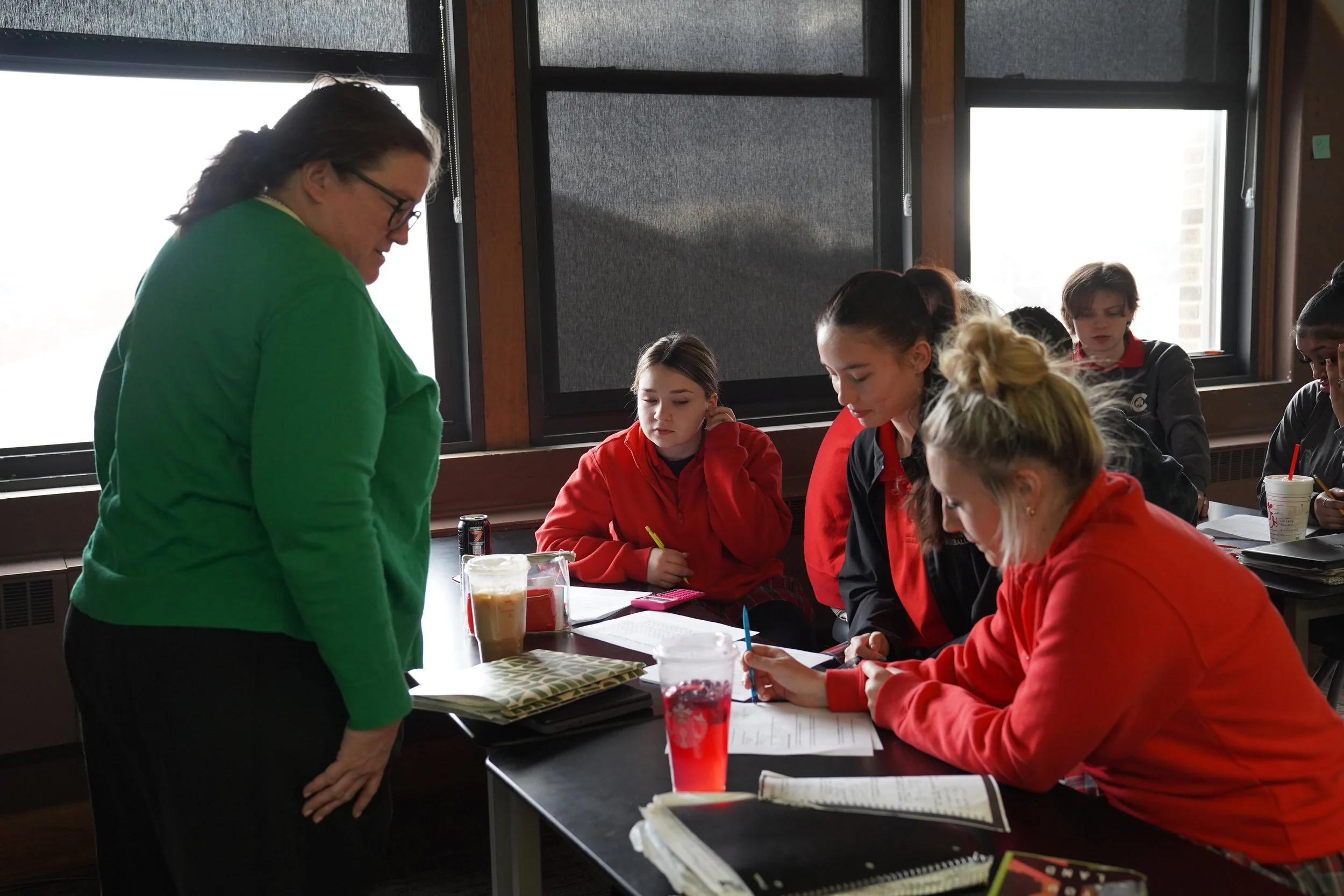
During a recent discussion in Biology class about the eight characteristics of life, students became fascinated by the question of whether an unfertilized chicken egg is considered alive compared to a fertilized egg that has begun developing into an organism. Although they were discussing chicken eggs, students independently made the connection to human life and began asking some thoughtful questions.
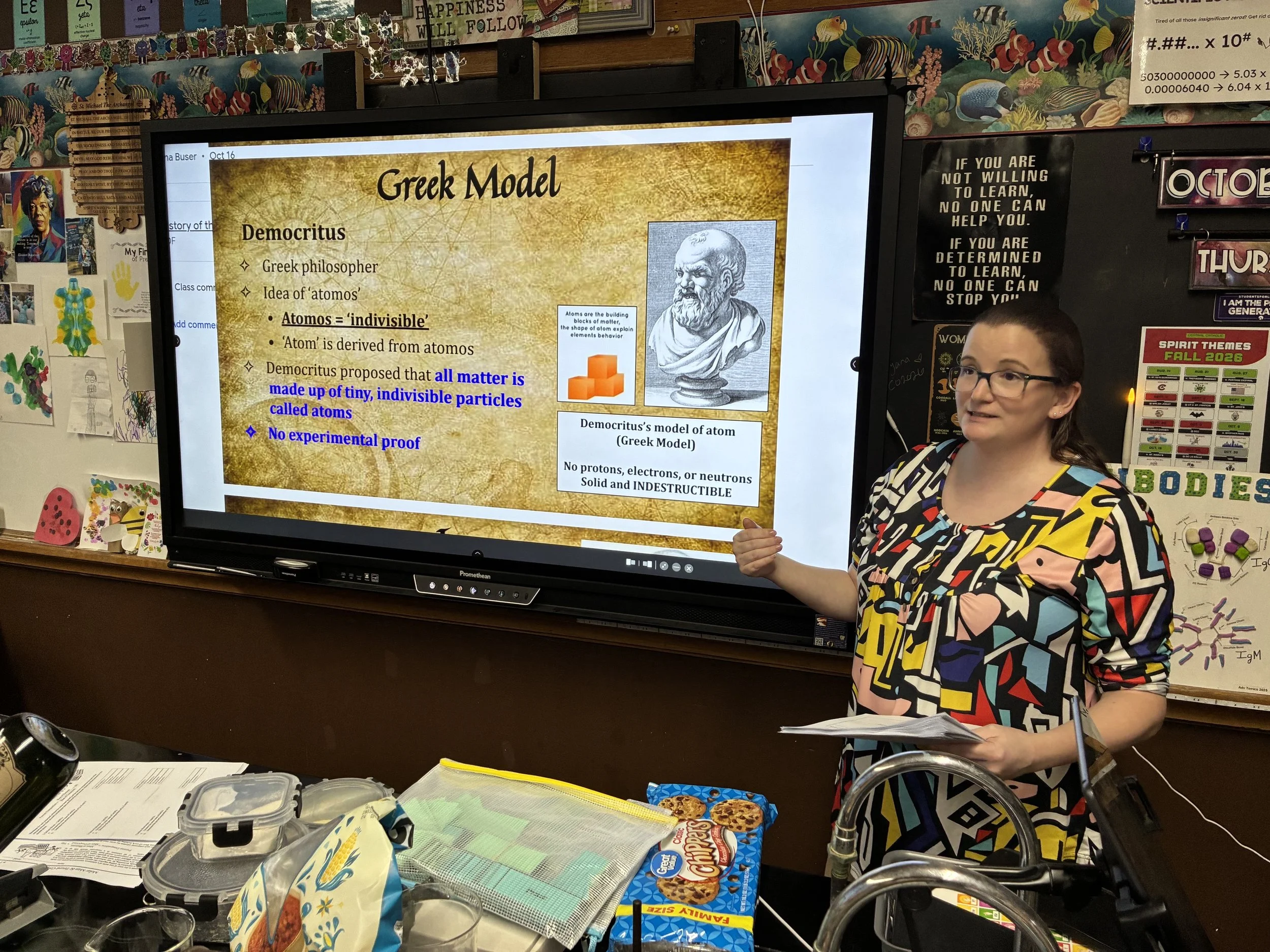
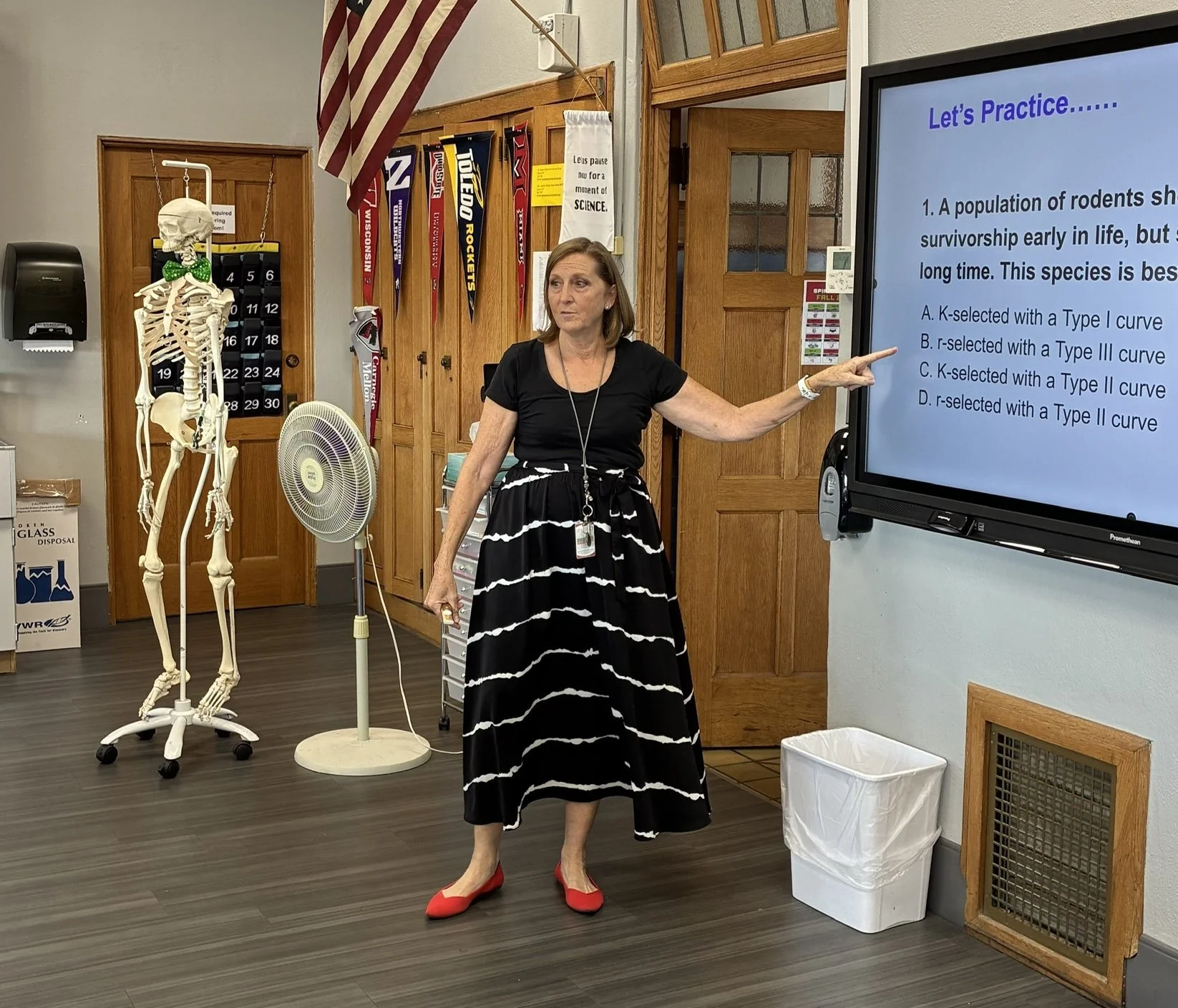
“I love moments like these because the conversation develops organically,” said Lyanna Buser, Biology and Chemistry teacher. “Students are encouraged to think critically about science while also considering larger questions about life, human dignity, and their faith. These discussions provide opportunities to connect scientific understanding with Catholic teachings without forcing the connection.”
CLASSROOM LEARNING & BEYOND
Students are required to take three years of science to earn a standard or college prep diploma, and four years to earn an honors diploma. The college prep diploma requires that one of the classes be Chemistry, and the honors diploma requires Chemistry and Physics or an AP science class. Every freshman starts with Biology, and then students are able to choose their path based on their interests.
The following classes are offered for each grade in our science curriculum:
· Freshmen - Biology (College Prep or Honors)
· Sophomores/Juniors/Seniors - Integrated Physical Science (College Prep), Chemistry (College Prep or Honors), Anatomy & Physiology (College Prep or Honors), AP Biology (Honors)
· Juniors/Seniors - Advanced Topics in Biology (Honors - semester), Chemistry in Life (College Prep - semester), Forensic Science (College Prep or Honors - semester), Marine Science (College Prep or Honors - semester), Physics (College Prep), AP Physics (Honors), AP Environmental Science (Honors)
Elective classes have been added to the curriculum due to student or teacher interest. “Chemistry in Life is an elective class that I started,” said Kim Bremer, department chair. “I wanted to show students how chemistry can be connected to the real world. We cover plants, art, and the kitchen. The students often finish the semester wishing it were a year-long course.”
Central Catholic launched the AP Environmental Science class five years ago in response to a growing interest in environmental issues among our students. The course has grown to be the most requested AP science course we offer. Last year, the class earned the Eco-Educator Award from the S.A.V.E. (Science Alliance for Valuing the Environment) Foundation. The award is a regional honor celebrating Toledo-area teachers who exhibit a strong commitment to environmental sustainability, spirituality, and ecological education.
This course also connects CCHS students to our community. Every fall, the class spends a day at Standing Rush Marsh. Students walk the miles of trails and learn how the marsh protects the shoreline and waters of Lake Erie, and they learn about the many species that call the marsh home. The students develop a much deeper understanding of and appreciation for the ways we are all called to care for God’s creation. This trip then generates dozens of discussions throughout the year about the ethics of caring for our world, its inhabitants, and each other.
Last year, the AP Environmental Science classes brought back a community outreach project that started before the interruption of Covid. The classes grow vegetable plants to donate to a local food bank so that their clients can enjoy fresh food all summer. Involving students in projects that directly help others is one of the most authentic ways to express their faith.
“The hands-on approach to learning in this class has ignited a passion for conservation in a number of Central Catholic students who are now going into careers in environmental science,” said teacher Patrice Brock. “By encouraging our students to view the natural world through a faith-based lens, we are planting the seeds for Earth’s future caretakers.”
Other field trips and activities are designed to supplement classroom science learning. Chemistry students will be visiting the University of Toledo's College of Pharmacy and Pharmaceutical Sciences. This experience will give them the opportunity to explore the many exciting career paths where chemistry and pharmaceutical sciences intersect. Through hands-on experiences in teaching and research laboratories, students can gain exposure to fields such as pharmacy, cosmetic science, formulation design, and drug discovery, while seeing firsthand how the chemistry concepts they study in class are applied in the real world.
Chemistry students have also done a children’s science book project. They worked together to research, write, illustrate, and create a book on a science topic, and then they went to OLPH where they read their stories and taught a lesson based on the science to students in Pre-K through third grade.
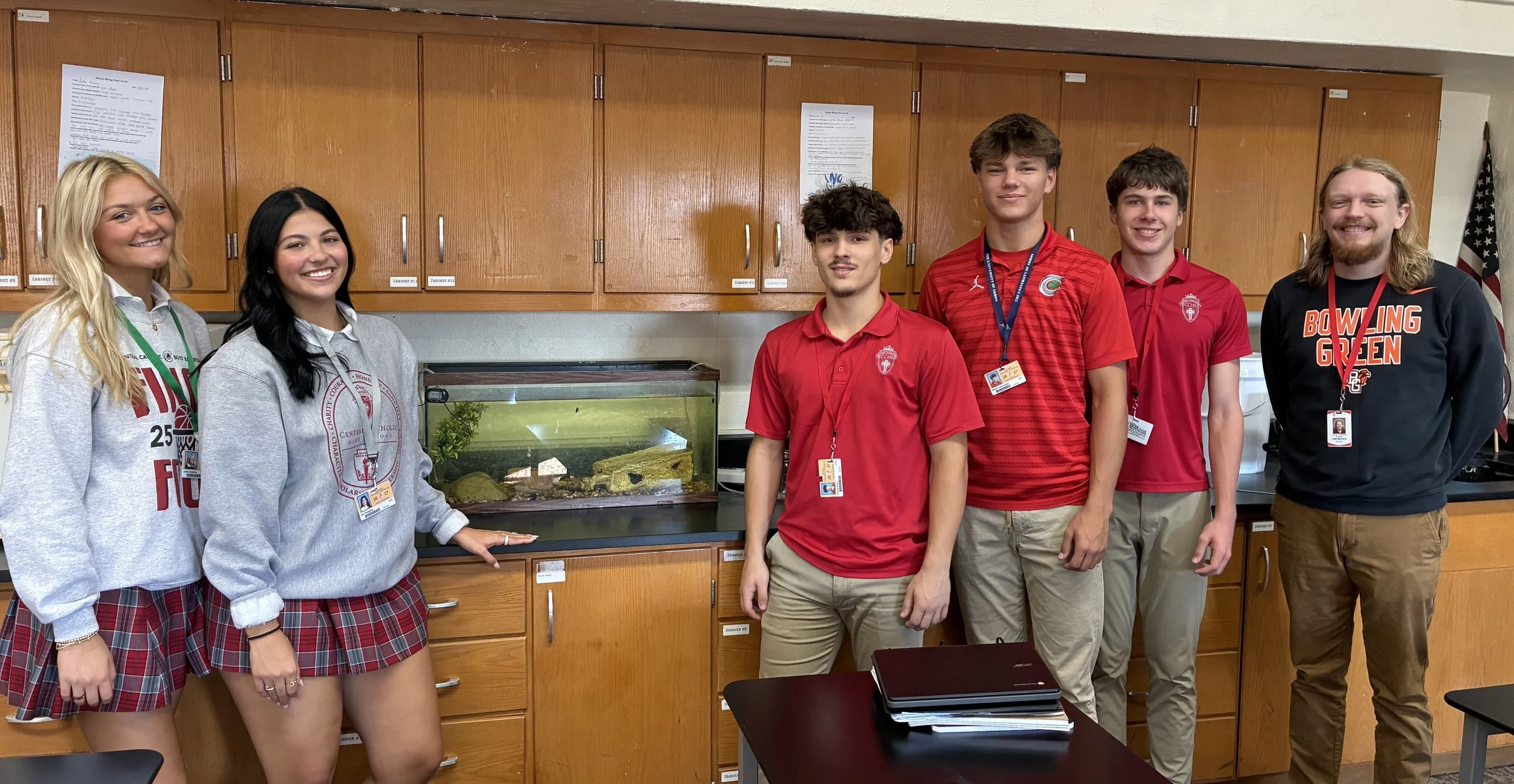
Marine Science students have taken field trips to Harroun Park and the BGSU Marine Lab to learn how to collect data and analyze it. The classroom recently added fish tanks, and students collected fish for one of them during their field trip to the park.
HANDS-ON ENGAGEMENT
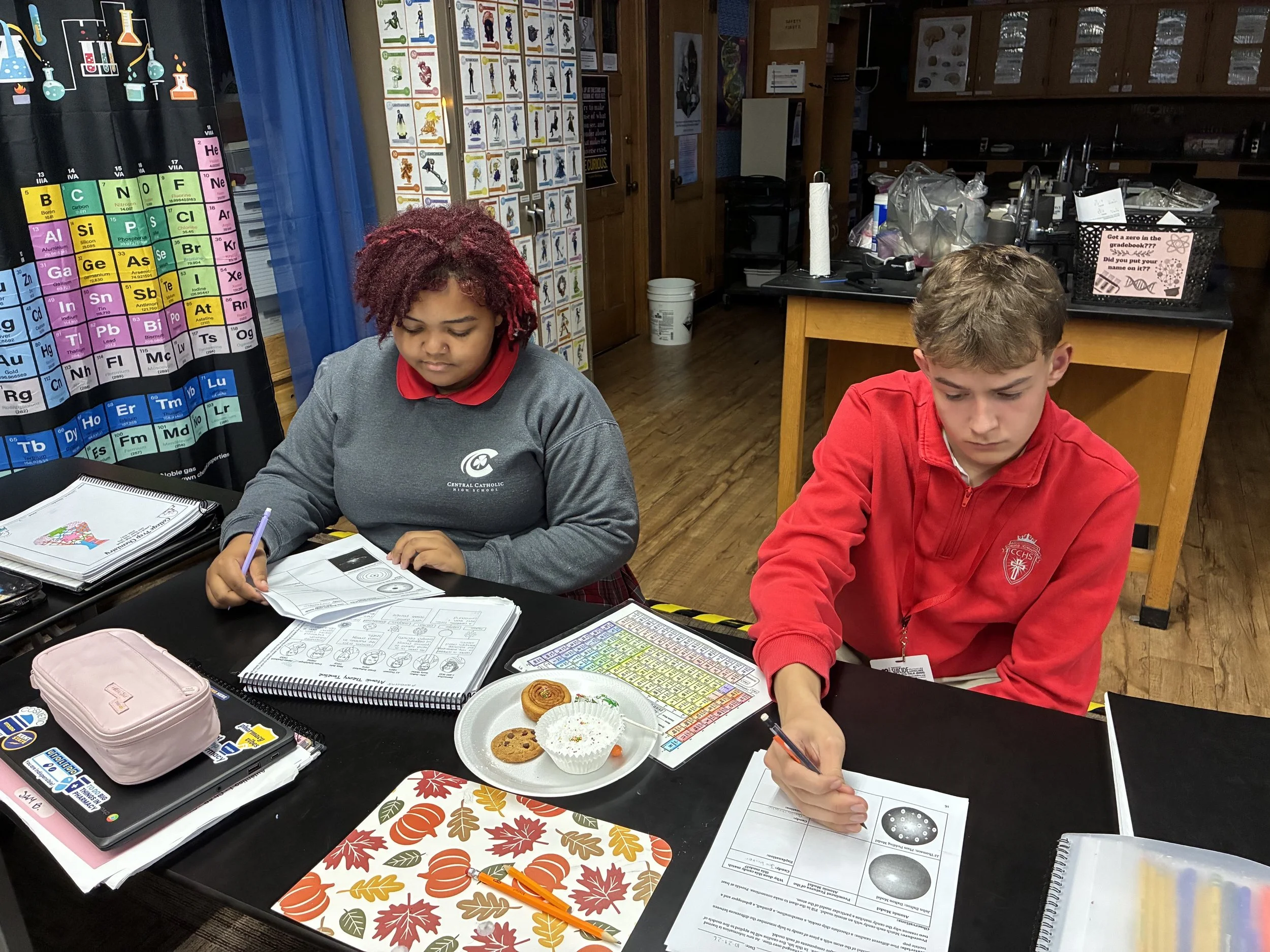
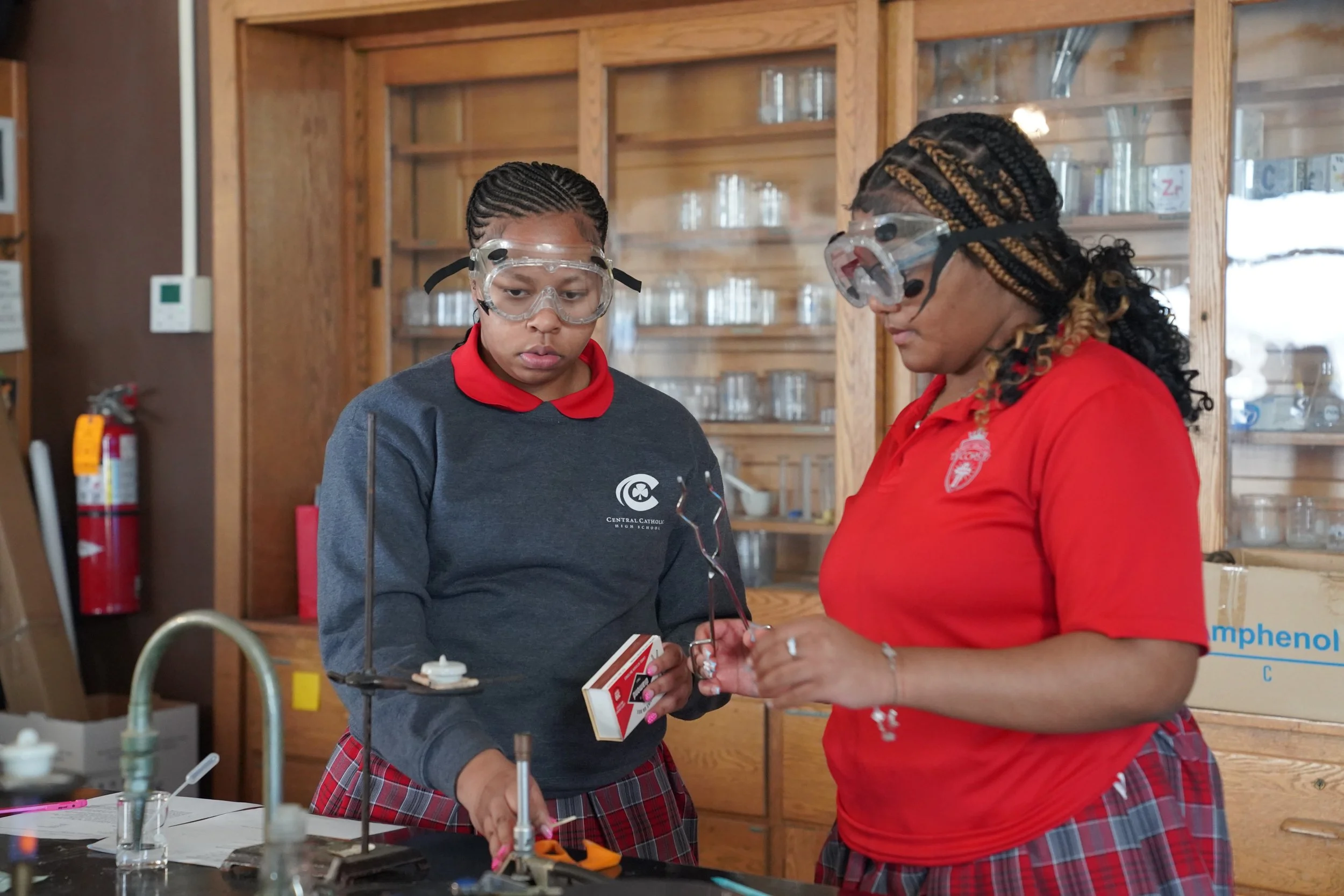
Science is one of the most hands-on subjects of study, and CCHS students take part in many experiments and dissection activities to complement their textbook learning. A student favorite in Chemistry class is the flame test lab, where students observe the characteristic colors produced by different metal ions as their excited electrons release energy in the form of visible light. During the stoichiometry unit, students design and build small boats powered by the carbon dioxide produced from a baking soda and vinegar reaction. They calculate the quantities of reactants needed, race their boats, and then modify their designs to improve performance, incorporating chemistry, engineering, and problem-solving.
The Marine Science students dissect squids and sharks. Rather than traditional dissections, students in Biology construct models of the cell membrane to explore its structure and selective permeability and use eggs to investigate osmosis and tonicity by observing how water moves across a membrane. To complement their study of genetics, Biology students extract DNA from strawberries, allowing them to see genetic material firsthand.
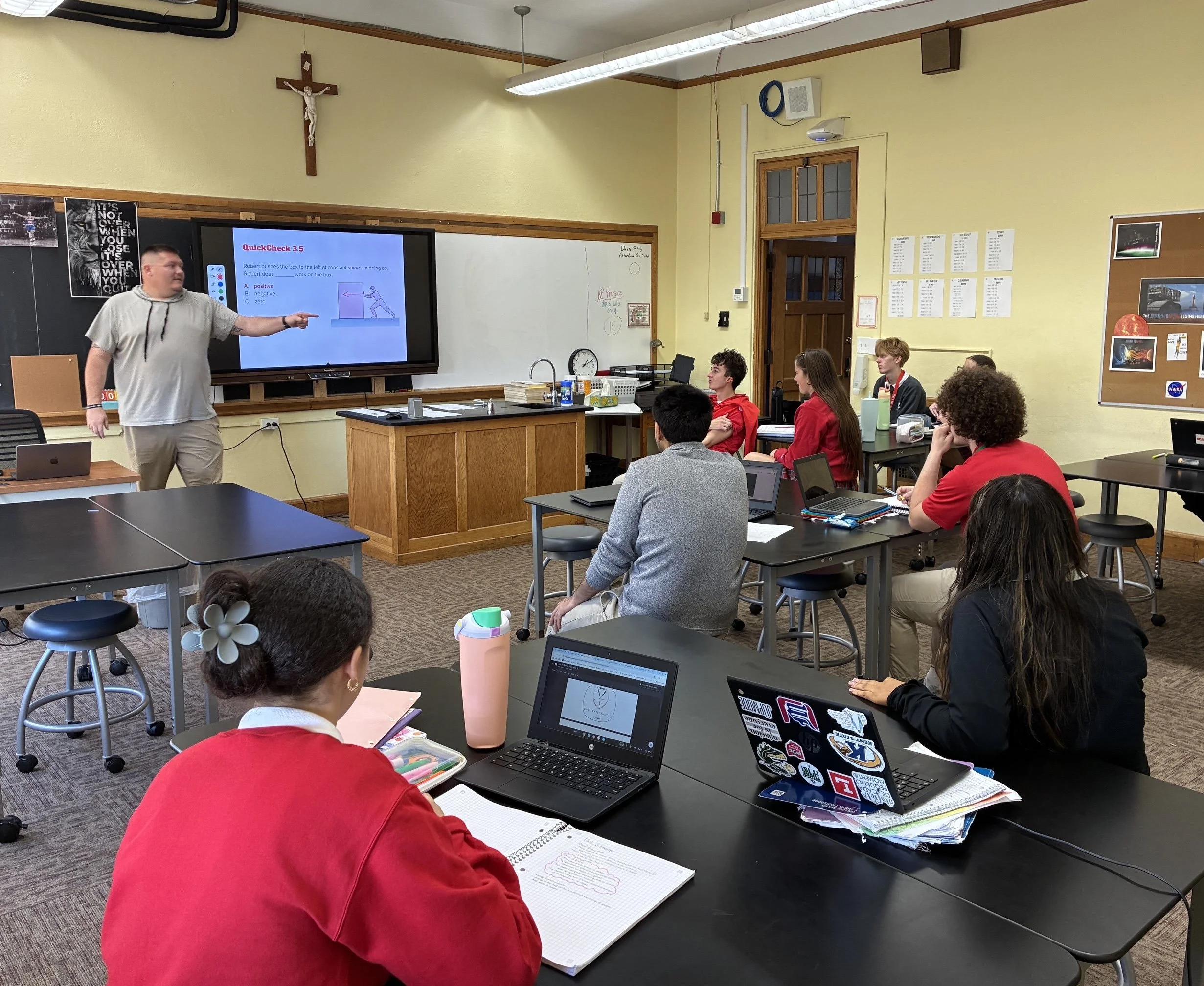
“All of my classes incorporate hands-on interactions with the concepts we are working on,” said Physics teacher Tyler Sibbersen. “Watching students learn from failures and have those light bulb moments that tie the content together with lessons is always memorable.”
Students in the Honors Biology and Chemistry classes participate in an annual science expo. This is a research-based expo rather than an experiment-based science fair. The students come up with their own topic and expo question, and then they research articles and scientific studies about the topic. Judges grade them on the topic they research, how thoroughly they research the subject, and an interview. Within their research, they are tasked with connecting their project to one of the seven Catholic Social Teachings:
· Life and Dignity of the Human Person
· Call to Family, Community, and Participation
· Rights and Responsibilities
· Option for the Poor and Vulnerable
· The Dignity of Work and the Rights of Workers
· Solidarity
· Care for God's Creation
In Chemistry classes, one topic that has sparked some interesting discussions is the relationship between light and life. While studying the electromagnetic spectrum, wavelengths, and the different types of radiation, students began exploring how something as essential as light can both sustain and harm living organisms. They discussed how visible light makes photosynthesis possible, how ultraviolet radiation can damage DNA, and how different wavelengths of light interact with the human body.
“These conversations help students recognize that concepts like wavelength, frequency, and energy aren't just equations in a textbook, but have real implications for our everyday lives,” said Buser. “I particularly enjoy these discussions because they encourage students to connect chemistry with biology, health, and the world around them.”
One hands-on experience has become a fun tradition in Chemistry class for students who earn top scores on their semester exams. During their kickoff to lab safety training, these students have an opportunity to pull the emergency safety shower in Mrs. Buser’s classroom, drenching her in the process!
SCIENCE FACULTY INSPIRES NEXT GENERATION
The teachers in our science department range from newer staff members to an educator with 33 years of experience.
· Kim Bremer, Department Chair (33 years) - Chemistry, Chemistry in Life, Integrated Physical Science
· Patrice Brock (13 years) - Advanced Topics in Biology, Anatomy & Physiology, AP Biology, AP Environmental Science
· Lyanna Buser (6 years) - CP Biology and CP Chemistry
· Sr. Maura Clare Mayock (2 years) - CP Anatomy & Physiology and CP Biology
· Trevor Hoffman (3 years) - Honors and CP Forensic Science, Integrated Physical Science, Marine Science
· Randall Pryor (3 years) - Nutrition, Phys Ed., Weightlifting & Advanced Fitness
· Tyler Sibbersen (1st year) - AP and CP Physics, Robotics, also teaches Algebra Concepts
· Kylee Stewart (6 years) - CP and Honors Biology, also the assistant dean
“I love that I work with individuals who want to excite kids about science and show them what's possible once they leave Central Catholic,” Bremer said. “I love that our kids are able to choose their path within our department, and that those who really love science are able to double and maybe even triple up courses in a year. I love that kids surprise themselves when they realize what they are capable of when they set their mind to it. I love the a-ha moments and when they realize that it's not that hard. I love when kids push themselves and when they take a new class for the experience.”
In 2025, Patrice Brock received the Excellence in Teaching Award through the Catholic High School League (CHSL). The award winners are recognized for their ability to inspire students and foster a love of learning. The award also acknowledges teachers who actively participate in school events, support their colleagues, and go above and beyond to meet the needs of their students and families.
“Receiving the Excellence in Teaching award was very humbling because I am blessed to teach alongside so many dedicated and highly skilled educators,” Brock said. “Doing the work we do is a calling more than just a job. Every day we get the chance to inspire the next generation to discover and follow their dreams. Not many people can say that!”
Previous Curriculum Features at CCHS
Faith Beyond the Classroom